It’s late, and you’ve checked the train timetable three times. You want to take your first trip alone. The thought of getting lost keeps coming back, even though you already know which train to take.
Journaling for anxiety can begin with a simple sentence about what you’re feeling right now. “I’m worried about getting lost” gives you something specific to work with. You can admit that the worry is here, then decide what you’d like to do next.
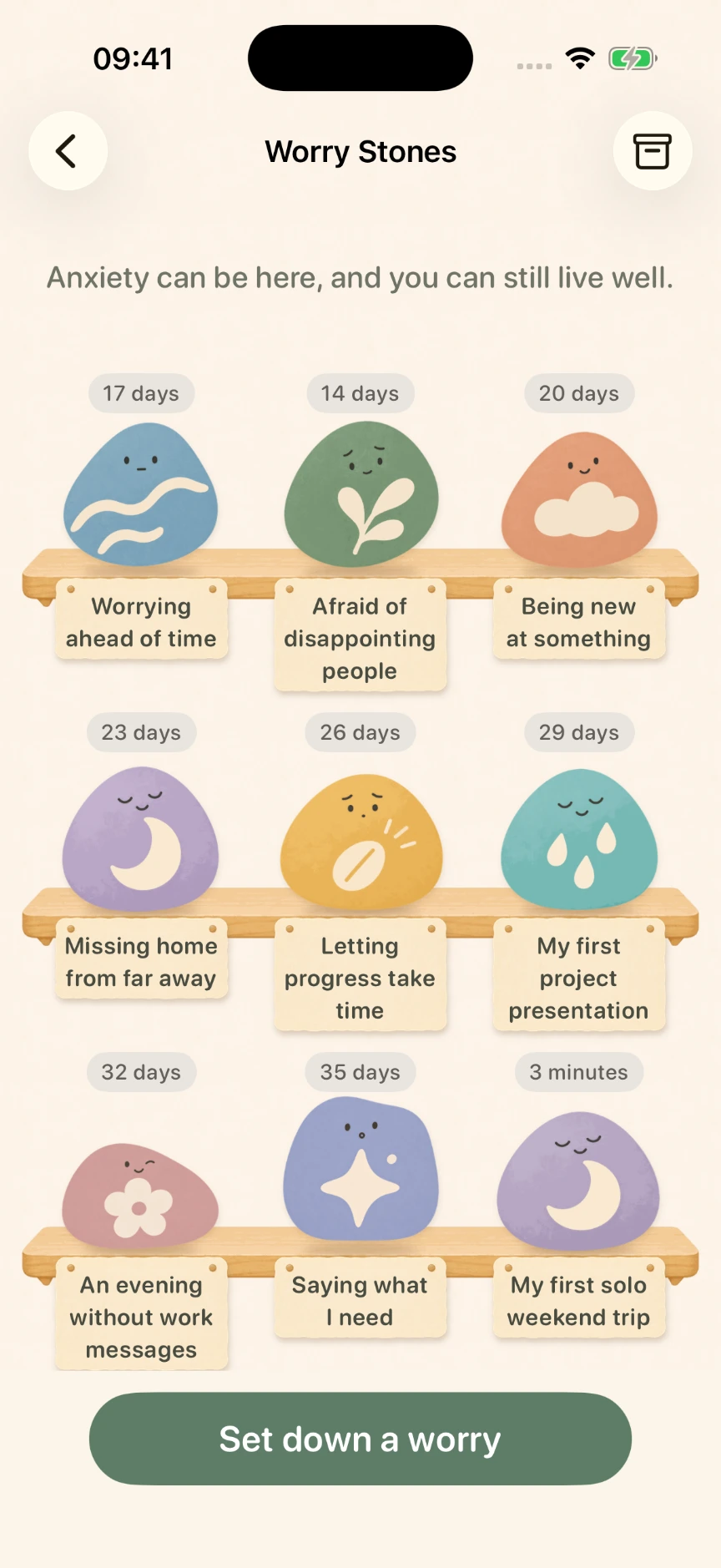
In Ying Journal for iPhone, Worry Stones gives a recurring worry its own named stone. You can start with one thought and add diary entries to the same stone over time. Here’s how that looks with the solo trip.
Start by acknowledging the worry
When a worry repeats, it’s easy to spend the evening replaying the same possibilities. For a moment, try putting into words what’s already happening. “I’m looking forward to the trip, and I feel anxious about finding my way.” Both feelings can be true.
In acceptance-based approaches, making room for anxiety means noticing your thoughts and feelings with less judgment. In a journal, that can be as ordinary as writing one honest line, then closing the page and going back to your evening.
If anxiety keeps interfering with work, sleep, or everyday life, a qualified health professional can help you find support.
Three journal prompts for anxiety
Pick the question that feels easiest to answer. For the train trip, the first answer might be “I’ll take the wrong train.” The second might be “I know my departure station and have the ticket on my phone.” The third might be “I’ll save the return timetable so I can find it later.”
- What am I worried might happen?
- What do I know has actually happened so far?
- What’s one small thing I can do while this worry is still here?
Give the worry a name in Ying Journal
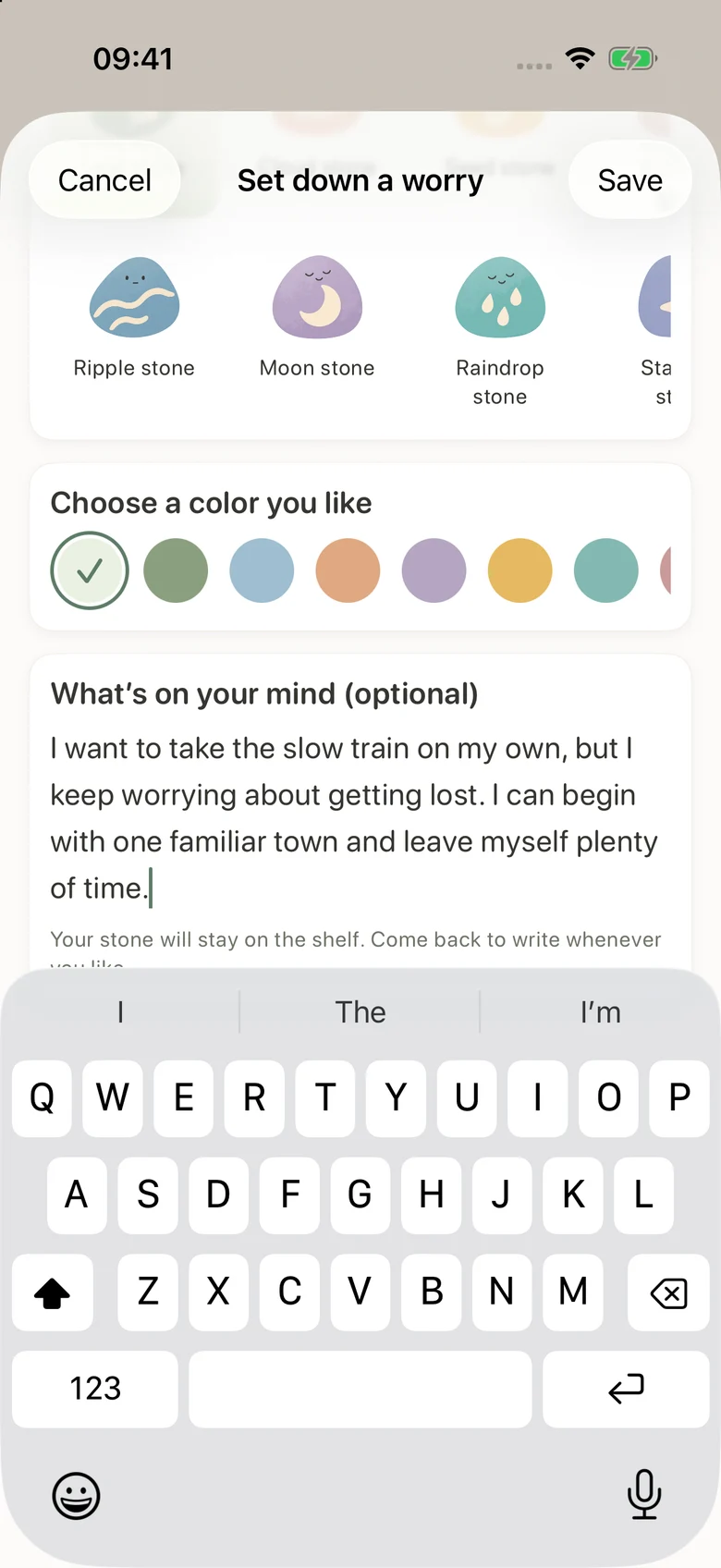
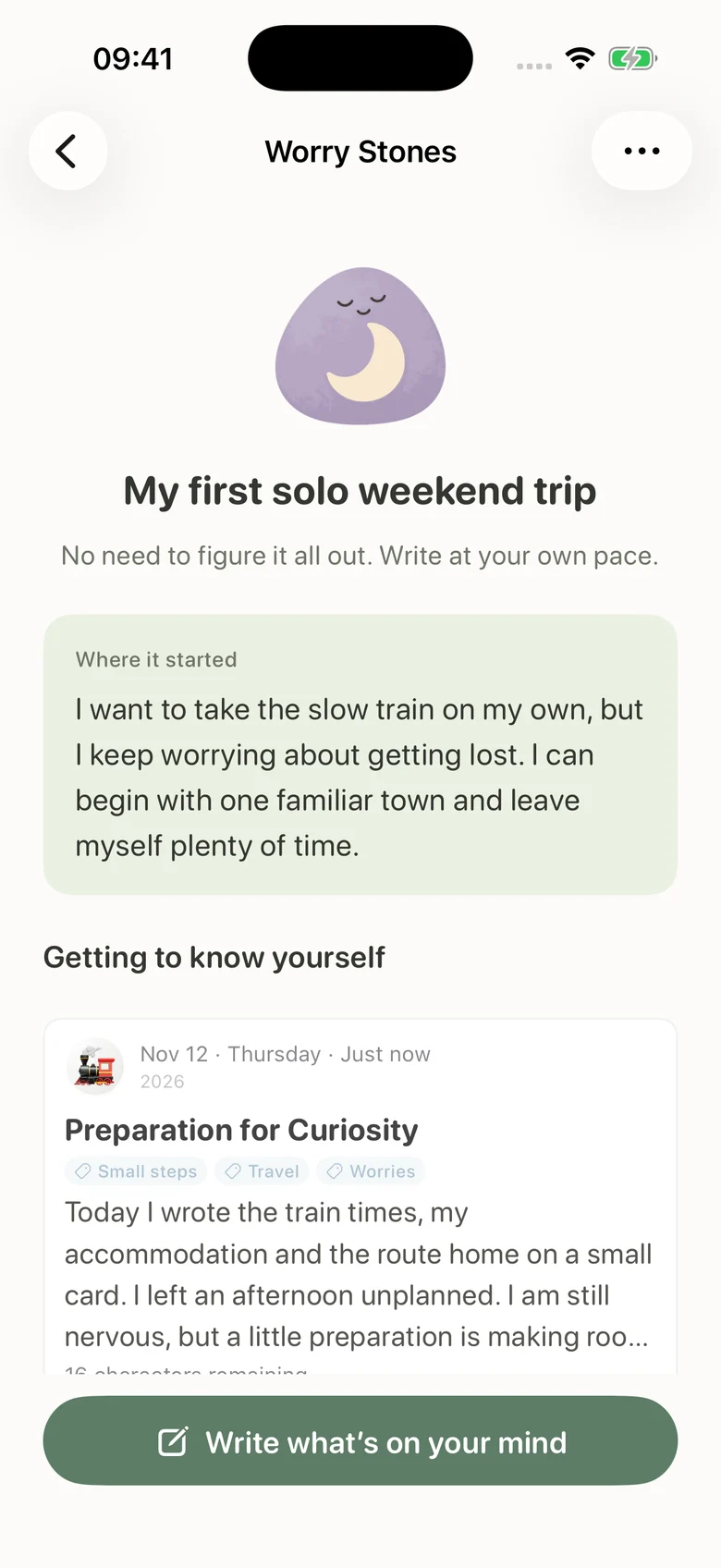
Open Worry Stones and tap “Set down a worry.” Choose a name you’ll recognize when you see it again. In this example, the stone is called “My first solo weekend trip.” Pick a stone and a color, then add an opening thought if you’d like.
The first thought can hold the part that feels hardest right now. In the example below, it’s the fear of getting lost. Starting with one familiar town gives the writer a small, concrete decision to make.
Come back when the same worry returns
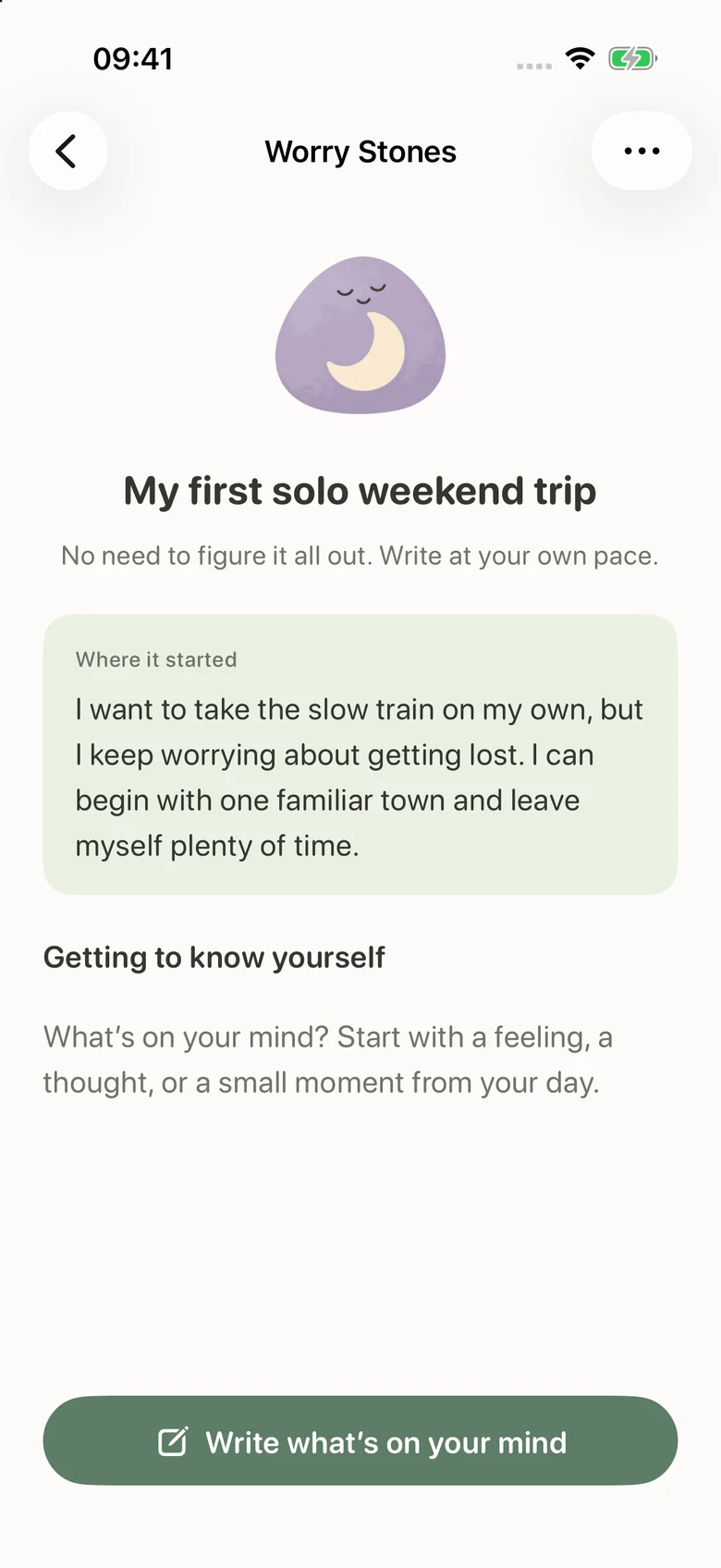
Open the same stone and tap “Write what’s on your mind.” Start with whatever feels true this time. Maybe the worry is as strong as before. Maybe something small happened that you want to remember.
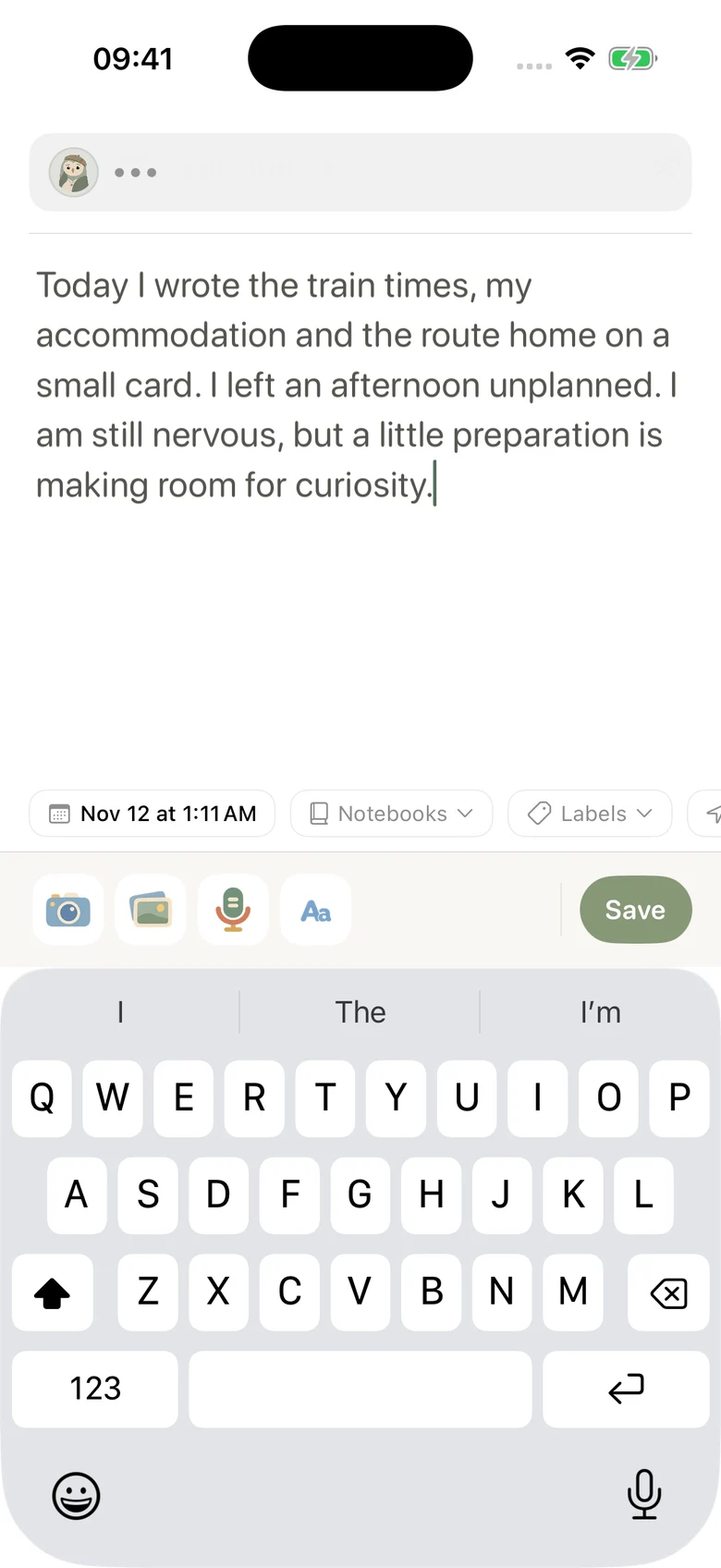
In the second entry, the writer saves the train times and the route home on a small card and leaves one afternoon open. They still feel nervous. They also notice a little curiosity about the trip.
Read the entries together when you’re ready
The first thought and the follow-up now live under the same stone. When you reread them, look for details such as what you expected, what actually happened, or what helped you take a small step. Here, preparing a route home made it easier to leave the rest of the afternoon unplanned.
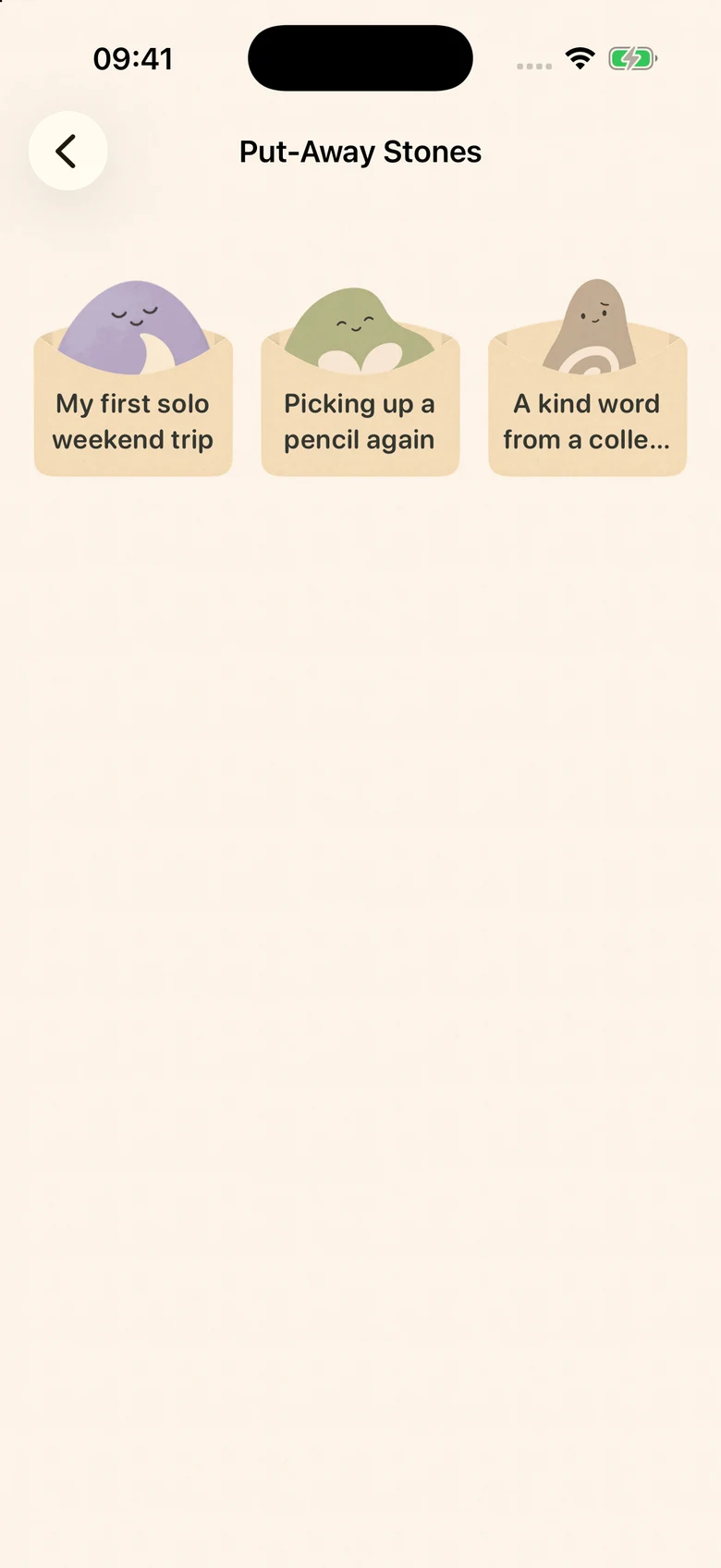
Some worries will sound much the same each time you write. You can simply notice that. When you want a break from seeing a stone on the shelf, use “Put Away” from its menu. You can open it again from Put-Away Stones whenever you like.
A small start, today.
The traveler still feels nervous about getting lost. The later entry has room for that feeling, a plan for getting home, and a little curiosity about the trip. When your own worry comes back, try giving it a name and writing one honest sentence about how it feels today. You can take one small step while the worry is still there, then put the journal down and return to your day. If there’s more to say tomorrow, you can come back to the same stone.

A LITTLE PLACE FOR YOUR EVERYDAY
Give a recurring worry its own stone.
Start with one thought in Ying Journal on iPhone, then come back whenever there’s something else you want to write.